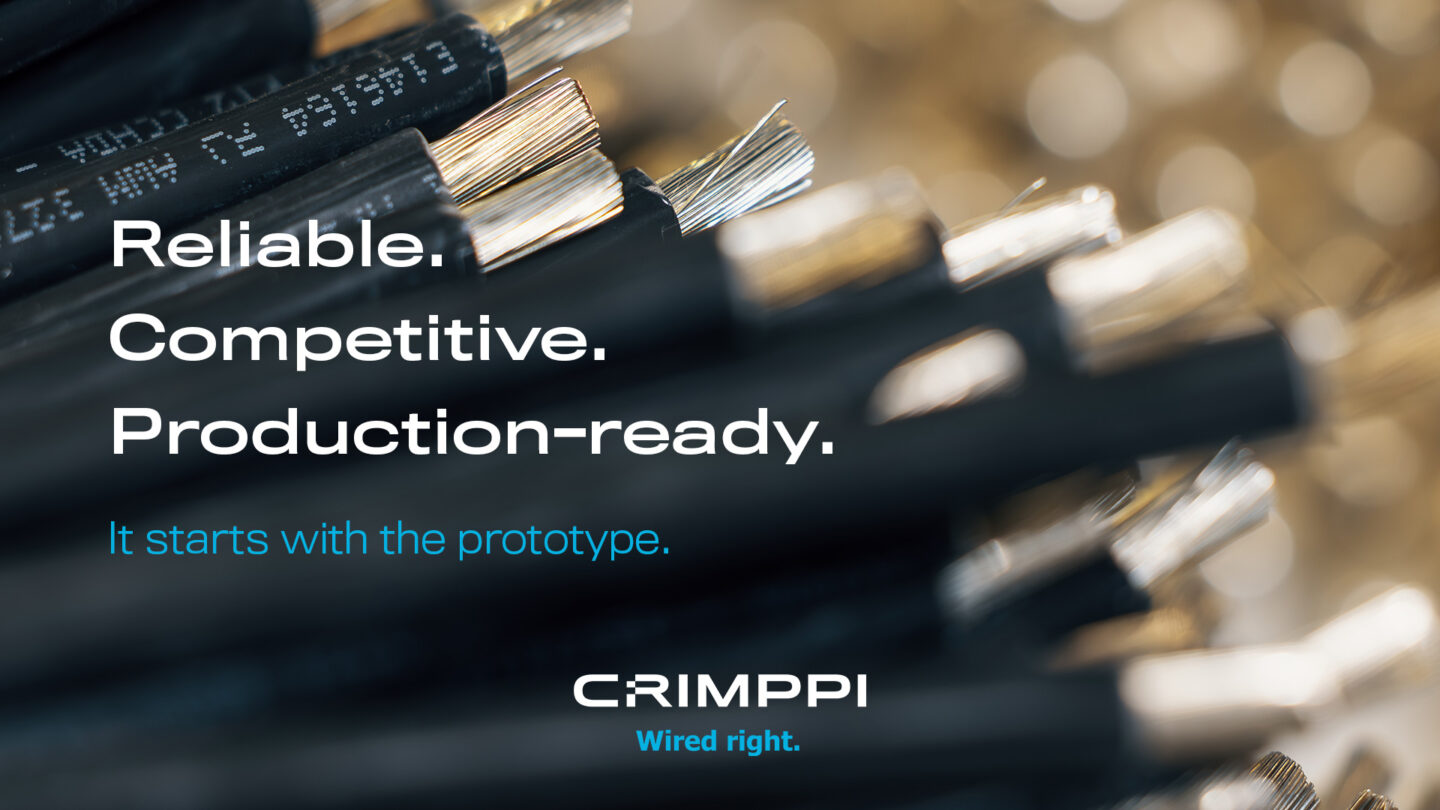
For a product development project, those early answers can save valuable time later. In addition to speeding up the process, prototyping also helps improve manufacturability, reduce risks and ensure consistent quality, ultimately making your product more competitive.
“The prototype phase is an essential part of product development, turning a design into a solution that works in practice and is ready for production. Our goal is to make that process as smooth and efficient as possible,” says Jesse Mäntylä, Key Account Manager at Crimppi.
The problems you’d rather find now than later
Prototypes are made in the majority of new projects at Crimppi, often as a small batch of around five units. Building those first harnesses turns the drawing into something tangible – and can expose details that are difficult to spot on paper.
A dimension may need adjusting, a component may not fit as expected, or a connector may need to be replaced.
“Sometimes you only see these things when you have the actual component in front of you,” Mäntylä explains. “We also need to make sure the right materials are available, that we have the tools we need and that the product can be manufactured smoothly. The prototype helps us make sure everything is ready before we move into production.”
Beyond identifying potential problems, the prototype phase gives Crimppi an opportunity to suggest improvements that can make the product easier and more cost-efficient to manufacture, without compromising quality.
Any proposed changes to customer-specified materials or components are discussed with the customer and documented.
Preparing everything for series production
The prototype phase produces two things in parallel: a wire harness for you to approve and a manufacturing process ready to produce it consistently. The Crimppi team creates work instructions, documents and photographs the product, and prepares the necessary tools, testers and assembly boards.
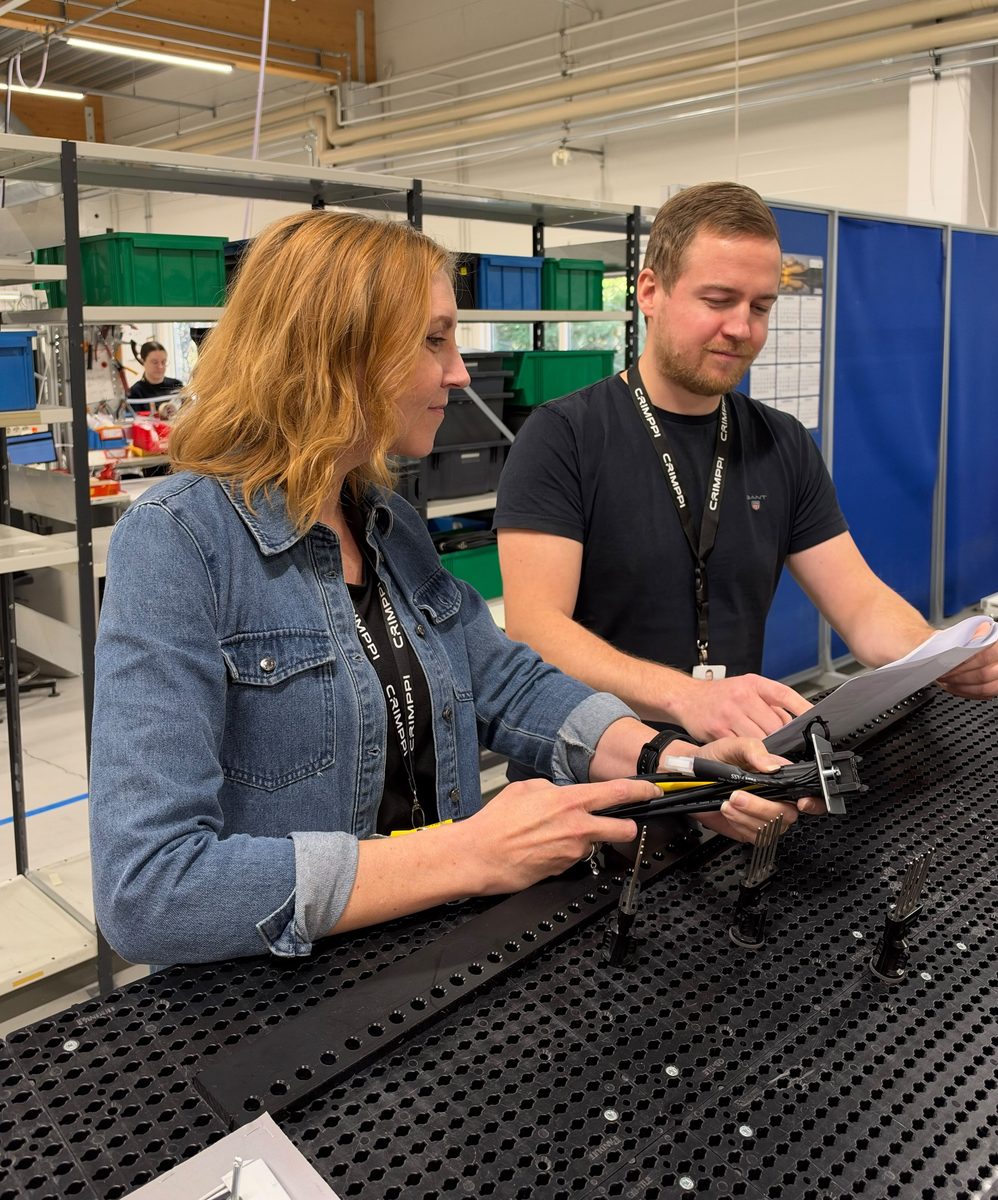
Helena Saari and Jesse Mäntylä are guiding Crimppi’s customers through the prototype phase
“The idea is to solve all questions during the prototype phase,” explains Helena Saari, Sales Engineer, Technical Sales, at Crimppi. “When the work instructions are clear and everything needed for manufacturing is ready, production doesn’t have to stop to figure out what to do. That makes the production stage easier and faster.”
Sales, purchasing, technical sales, the prototype team and the service team all contribute their expertise. Bringing these different perspectives together helps ensure every aspect of the prototype is carefully considered before it reaches you.
“Throughout the prototype phase, we systematically document our findings, proposed improvements and test results. This way, you get clear feedback and a report that helps you make informed decisions and move smoothly towards series production,” Saari continues.
From approval to production in days
Once you have tested and approved the prototype, Crimppi can make any final adjustments to the documentation and move the product into series production. This transition can sometimes take just a few days.
“If the materials are readily available, you could actually have the first series-produced wire harness in your hands within a month of the initial contact,” says Saari.
Ultimately, prototyping is an investment in a reliable, competitive and production-ready product. By having the important questions answered early, you can avoid costly surprises and delays further down the line.


